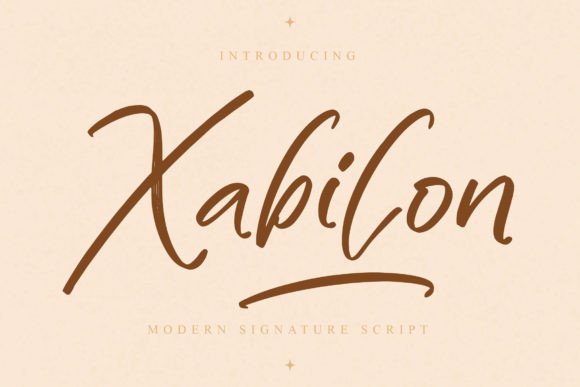
Xabilon – Modern Signature Script for Web Design
Xabilon is a modern signature script font that brings a touch of elegance and personality to digital projects. As a web designer, I’ve found it particularly useful for creating visual interest in headers, logos, and branded content without sacrificing readability. Its clean yet expressive style makes it ideal for websites that need to stand out while maintaining a professional tone.
Visual Characteristics and Style
Xabilon has a contemporary feel with subtle variations in stroke weight and natural flourishes that mimic handwritten text. This gives it a personal and approachable look, which can be especially effective for creative portfolios or boutique online stores. The font’s structure is well-balanced, making it easy to read even at smaller sizes on mobile screens.
The script style of Xabilon works well for hero sections, call-to-action buttons, and branding elements where a more artistic touch is needed. It pairs nicely with sans serif fonts for body copy, ensuring the design remains legible and visually balanced.
Applications in Web Design
Xabilon can be used in various parts of a website to enhance the overall design. For example, using it for section headings adds a sense of movement and creativity. In landing pages, it can help draw attention to key messages or value propositions. On product pages, it can be used sparingly to highlight feature titles or promotional phrases.
For a coaching website, Xabilon could serve as the primary font for headlines and taglines, reinforcing a warm and trustworthy brand identity. In an online store, it might be used for banner text or promotional slogans, adding a unique flair that differentiates the brand from competitors.
When designing course pages or blog headers, Xabilon can create a more engaging visual hierarchy. It’s also suitable for digital ads, where quick readability and strong visual impact are essential for capturing user attention.
Readability and User Engagement
One of the most important considerations when choosing a font is readability. Xabilon performs well in this regard, especially when used for short phrases or headings. Its consistent line height and spacing make it easy to scan, which is crucial for user engagement on websites.
On mobile devices, Xabilon maintains its clarity even at reduced sizes, making it a reliable choice for responsive layouts. When used on dark backgrounds or image overlays, it still stands out without becoming too busy or hard to read.
For small buttons or call-to-action areas, Xabilon should be used with caution. While it adds visual appeal, it may not be the best option for very short text due to its script nature. In these cases, a simpler sans serif font might be more appropriate for ensuring quick recognition and click-through rates.
Font Pairing and Brand Identity
Font pairing is an essential part of web design, and Xabilon works well with a variety of other typefaces. A common and effective pairing is to use Xabilon as a display font alongside a clean sans serif font like Helvetica or Arial for body copy. This combination ensures that the design remains both stylish and functional.
For editorial designs or blog platforms, pairing Xabilon with a serif font can add a more traditional and refined look. This is particularly useful for websites focused on storytelling, education, or niche content where a sense of authority and trust is important.
When building a brand kit, including Xabilon as a primary or secondary font can help maintain a consistent visual identity across all digital assets. It’s especially valuable for logos, social media graphics, and packaging design, where a distinctive typeface can leave a lasting impression.
Practical Considerations for Web Use
Before implementing Xabilon on a website, it's important to check the available styles, weights, and file formats. Ensuring that the font is compatible with webfont technologies is crucial for smooth performance across different browsers and devices.
Also, verifying multilingual support is essential if the website targets a global audience. Xabilon should be tested in various languages to ensure that characters render correctly and consistently.
Commercial font licensing is another important consideration. If the font will be used for client projects, online stores, or digital templates, it's necessary to confirm that the license allows for such usage. This helps avoid legal issues and ensures that the font can be used freely across all intended platforms.
In summary, Xabilon is a versatile and stylish script font that can elevate the visual appeal of any digital project. Whether used for logos, headers, or branded content, it offers a balance between creativity and functionality that aligns well with modern web design practices.